
What is Anchor Text?
Simply put, anchor text is the visible, clickable text in a hyperlink. If you’re reading an article and see a phrase highlighted in blue that takes you to another page when you click it, that’s the anchor text.
In the “under the hood” HTML code, it looks like this:
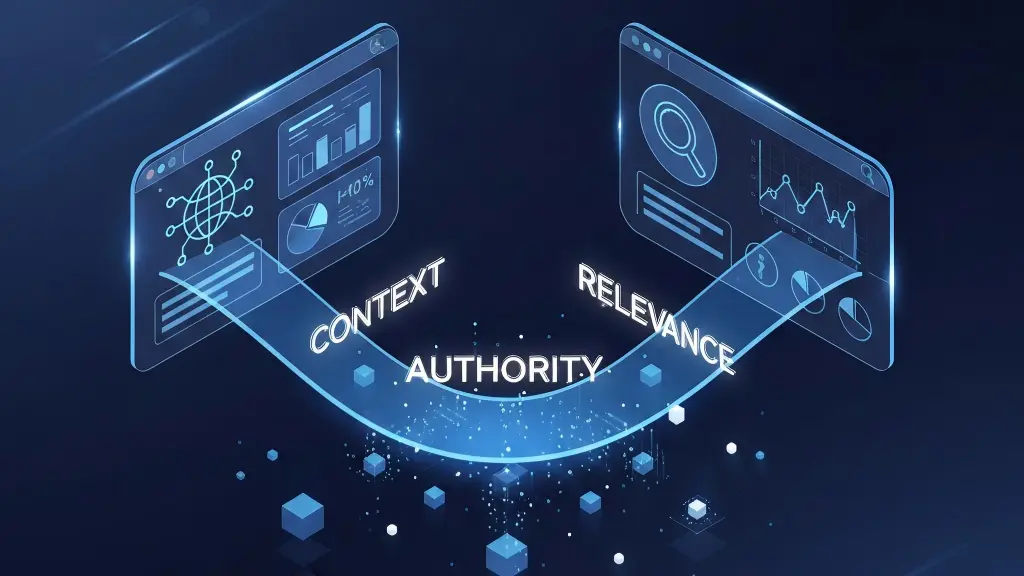
<a href="https://example.com/seo-guide">best SEO practices</a>I like to think of anchor text as a contextual bridge. It isn’t just a button; it’s a signal that tells both my readers and AI-powered crawlers (like Google’s Gemini or Perplexity) exactly what they will find on the other side of that bridge.
How to Use Anchor Text in 2026
The days when we fooled search engines with keywords are over.
Nowadays, it is all about transparency and E-E-A-T (Experience, Expertise, Authoritativeness, and Trustworthiness). This is how I currently go about my linking strategy.
1. Prioritize Descriptive & Natural Phrases
Gone are the days when I would use “click here” or “this post.” Those phrases are dead weight. In 2026, AI uses Natural Language Processing (NLP) to understand the entire sentence surrounding a link. If I use generic text, I’m wasting an opportunity to provide context.
- What I avoid: To learn about backlink monitor, click here.
- What I do instead: If you’re a beginner, check out our easy to use backlink status monitor.
2. Master the “Contextual Blend”
I’ve learned that Google is swift to flag ‘over-optimized’ sites, those that use the exact same keyword for every link.
To help my site stay healthy and trustworthy, I use a diverse ‘anchor profile,’ which empowers me to maintain a balanced and responsible linking strategy.
3. Optimize for “AI Overviews”
The most significant change in 2026 is that we aren’t just ranking for a list of links; we’re ranking to be cited in AI Overviews.
These AI agents look for semantic depth. When I link, I try to connect my page to a broader “entity” or topic.
Because quality is so vital now, I don’t just build links and forget them. I personally use MyLinkStatus for monitoring backlink existence.

It’s my go-to for analyzing anchor text distribution to make sure my “Contextual Blend” doesn’t accidentally lean too hard on a single keyword, which could trigger a penalty.
4. The “Internal Link” Strategy
My internal links are more important than ever for creating Topic Clusters.
I start with a broad “Pillar” page and then link out to specific “Cluster” pages using particular anchor text. This tells the search engine, “I have a deep library of expertise on every sub-topic.”
5. Accessibility and Mobile-First
- Visual Clarity: I make sure my links stand out. If they don’t look clickable, people won’t click them.
- Tap Targets: Since most of my readers are on mobile, I make sure my anchor text is at least 3-4 words long. It’s much easier to tap a whole phrase with your thumb than a single tiny word.
My 2026 Summary Checklist
I use the following checklist before I press publish:
- Is it succinct? I attempt to limit it to five words or so.
- Is it relevant? Is the next page properly described in the text?
- Is it varied? Did I verify my profile in MyLinkStatus to make sure I have anchor diversity?
- Is it human-first? Does the link feel like a natural part of the conversation?
Conclusion: Linking for the Future
In 2026, the concept of the anchor text is not a hack to increase the rankings; it is a tool of high-level communication.
With the emphasis on natural/descriptive language and the healthy and diverse link profile provided by such tools as MyLinkStatus, you will be able to make sure that your site is human-friendly and AI-ready at the same time.
Keep in mind, every connection you make would be a promise to your reader as to what he will read next.
Stay to the point with promises, maintain a variety of anchors, and you will see that both the customers and the search engines will have faith in your authority in any field.