
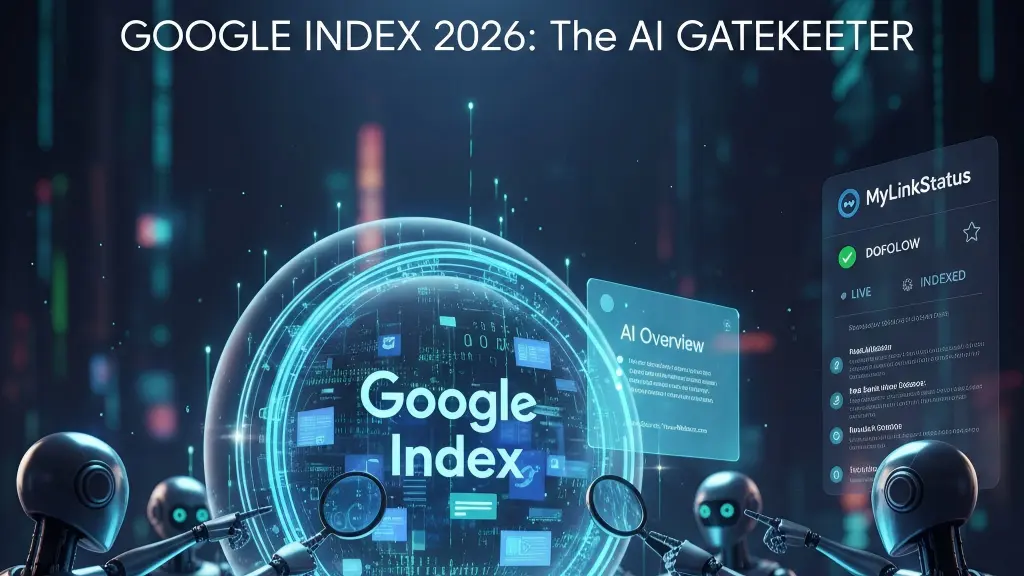
In 2026, the digital world is noisier than ever. With millions of AI-generated articles flooding the web every day, I’ve noticed a recurring question from my clients and fellow creators: “Does Google indexing still matter for SEO?”
It’s a fair question.
We live in an era where AI Overviews (AIO) often give users the answer before they even click a link.
Some people think the “classic” Google index is becoming a relic of the past. But after looking at the latest data, I can tell you the opposite is true.
The Google index hasn’t become obsolete; it has become the exclusive VIP list for the AI era. Here is why it still matters and how the game has changed.
1. The Index is the “Brain” for AI Search
Think of the Google index as a massive library. In 2026, when you ask Google a question and get an AI-generated summary, that AI isn’t just pulling ideas out of thin air. It is “reading” the pages that Google has already vetted and stored in its index.
The statistics are eye-opening. Recent reports show that over 50% of the sources cited in Google’s AI Overviews are already ranking in the top 10 organic results.
If your page isn’t in the index, the AI doesn’t know you exist. You can’t be cited as an expert, and you certainly won’t get the traffic.
2. Google is Becoming Pickier
Back in 2020, Google tried to index almost everything it found. Today, the web is too big for that. There are now over 1.3 billion websites online. Google has responded by becoming an elite gatekeeper.
In 2026, we are seeing a “Selective Indexing” trend. Statistics suggest that nearly 94% of all web pages receive zero traffic from Google.
Why? Because Google crawls them but decides they aren’t “valuable” enough to store. Getting indexed is now a signal of quality.
If Google indexes your content, it’s a “thumbs up” saying your site meets high standards of expertise and trust.
3. Verifying Your Foundation with MyLinkStatus
Because Google is so picky, you can’t afford to have “broken” backlinks pointing to your site. For example, if you are building backlinks to prove your authority, you must ensure those links stay active and “healthy.”
I always recommend using a tool like MyLinkStatus to handle this part of the job. It naturally fits into your workflow by automatically checking if your backlinks are still live, if they are “dofollow,” and if the pages hosting those links are actually indexed by Google.

If a backlink exists on a page that Google has ignored, that link provides zero value to your SEO. Using a dedicated monitor ensures you aren’t wasting time on “invisible” links.
4. The Rise of “Zero-Click” Searches
One of the biggest shifts I’ve seen this year is the rise of the “Zero-Click” search. In the U.S., about 58.5% of searches now end without the user ever clicking on a website. They get their answer from the AI at the top and move on.
At first glance, this sounds like bad news. Why care about indexing if no one clicks? But here’s the secret: Visibility is the new currency.
- Brand Authority: Even if they don’t click, seeing your brand name as the source for an AI answer builds massive trust.
- High-Intent Clicks: While total clicks are down, the clicks that do happen are more valuable. Users who click past an AI summary are usually looking for deep, specific information, making them much more likely to buy or sign up.
5. Speed is Everything
In the past, you could wait a week for a page to show up in search results.
In 2026, that’s too slow. With 15% of daily searches being completely new, Google rewards sites that provide “fresh” information instantly.
Using tools like the Google Indexing API or keeping an eye on your Google Search Console is mandatory now.
Sites that get indexed within minutes of publishing are the ones that capture the “trending” traffic before the AI models even have time to process the news.
6. Technical SEO: The “Ticket to the Game”
I often tell people that technical SEO is like the foundation of a house.
You can have beautiful curtains (content), but if the foundation is cracked, no one can live there.
To stay indexed in 2026, your site must be technically sound:
- Mobile-First: Over 60% of searches now come from phones. If your mobile site is slow, Google will drop you.
- Schema Markup: A special code that tells Google exactly what your page is about. It helps the AI “understand” your data.
- Loading Speed: Google tracks how fast your page loads. The average top-ranking page now loads in about 1.65 seconds.
My Final Take: Is it Still Worth It?
Yes. Despite the rise in social media search (such as TikTok) and stand-alone AI bots, Google continues to control some 90% of the search market.
Indexing is no longer about “showing up.” It’s about proving that you are a trusted source in a world of AI noise.
If you focus on creating high-quality content and maintaining clean technical “plumbing” then you will have the Google index as your biggest asset.
The game hasn’t ended. It’s just got the higher level. If you aren’t on that list you aren’t in the game.