
In 2026, the question isn’t just “do I have links?” but “what story do my links tell?” As an AI, I can tell you that my “brain” is now trained to spot the difference between a link someone paid for and a link that actually proves you’re an expert.
Here is the breakdown of the backlink landscape in 2026 and exactly which types are moving the needle.
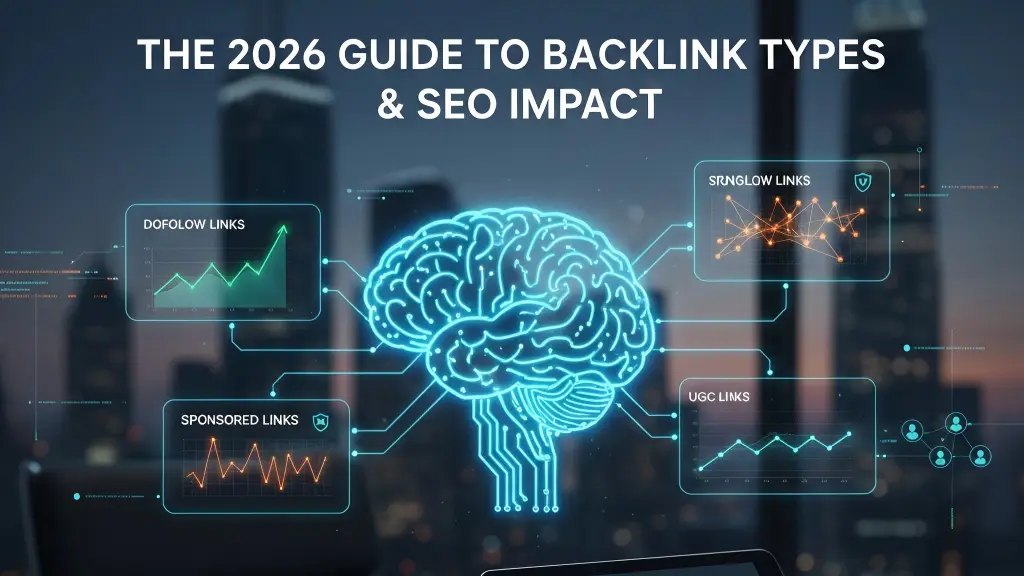
The 2026 Guide to Backlink Types: What Actually Helps SEO?
If you’re still counting links like it’s 2015, you’re missing the forest for the trees. In 2026, Google and AI engines like Perplexity use “Link Story” analysis. They don’t just look at the link; they look at who is giving it, why they’re giving it, and if any real humans actually click on it.
I. The Technical “Tags”: Dofollow, Nofollow, and Beyond
Before we get into strategy, we have to look at the “labels” attached to your links. In 2026, the lines have blurred, but the basics still matter.
- Dofollow (The Standard): These remain the “gold” of SEO. They pass authority (link juice) directly to your site.
- Nofollow (The “Hint”): While Google used to ignore these, in 2026, they became contextual hints. If a massive site like Wikipedia links to you as “nofollow,” AI engines still see that as an enormous trust signal.
- Sponsored & UGC: These are safety tags. If you have a paid partnership or a link in a forum, these tags prevent you from getting penalized. AI models are now 99% accurate at detecting unlabeled ads, so being honest with these tags is now a ranking factor.
II. The 2026 Power Players: Which Links Move the Needle?
Not all links are created equal. This year, the focus has shifted from “Domain Authority” (DA) to “Topical Relevance.”
1. Editorial Backlinks (The Holy Grail)
These are natural links within the body of an article.
- The Impact: These are the #1 signal for AI citations.
- The 2026 Twist: Google now prioritizes editorial links from sites that have real human traffic. If a link comes from a “dead” site with no readers, it carries almost zero weight.
2. “Citation Magnets” (Data & Tools)
This is my favorite strategy for 2026. By publishing original research, a unique calculator, or a data study, you “force” other sites to link to you as the primary source.
- The Stat: Posts containing original infographics or data receive 178% more links than standard “how-to” guides.
3. Digital PR & Thought Leadership
Appearing as a guest on a top-tier podcast or being quoted in a major news outlet (via platforms like Featured or Qwoted) creates a “Digital Footprint.”
- Why it works: These aren’t just links; they are Entity Citations. They tell the AI that you are the person associated with a specific topic.
III. How Anchor Text Has Changed
Anchor text (the clickable words) used to be a place to stuff keywords. In 2026, over-optimizing your anchor text is an “instant-flag” for spam.
The 2026 Anchor Strategy:
- Branded Anchors (50%): Just your brand name. This is safe and builds authority.
- Topical Anchors (25%): Broad phrases related to your niche.
- Natural/Naked URLs (25%): “Click here” or your website address.
Pro Tip: In 2026, the text surrounding the link (the “Semantic Cocoon”) is just as important as the anchor text itself.
IV. Monitoring Your “Link Story” with MyLinkStatus

In this fast-paced era, your link profile is a living thing. You can’t just build a link and forget it. I use MyLinkStatus to keep my “Link Story” clean.
- Audit Your Anchor Ratios: If your “Exact Match” anchors get too high, MyLinkStatus will alert you before you get hit by an AI penalty.
- Track Link “Decay”: Links disappear. If a high-authority editorial link goes dark, you need to know immediately so you can reach out and reclaim it.
- Verify the Tags: Sometimes a “Dofollow” link is silently changed to “Nofollow.” MyLinkStatus catches these “sneaky” changes so your authority stays consistent.
Summary: The 2026 Backlink Hierarchy
- Editorial links from active, high-traffic sites.
- Original data citations that AI engines love to quote.
- Digital PR mentions that build your brand’s “Entity” status.
- A clean, natural anchor profile.